Exhaust Gas Treatment System Renovation and Upgrade Services
After a long period of operation, many existing exhaust gas treatment systems no longer effectively meet current environmental standards. Renovating and upgrading the exhaust gas treatment system has therefore become a necessary solution to improve treatment performance and ensure legal compliance. It is also a strategic step that helps businesses grow sustainably and become more environmentally friendly.

Article contents:
1. When an exhaust gas treatment system needs renovation or upgrading
Below are some situations that call for renovating and upgrading an exhaust gas treatment system:
1.1. The system does not meet environmental standards
- Outlet emission analysis results exceed the limits set by QCVN.
- Inspections by the authorities requiring pollution to be remedied.
- Complaints from nearby residents about odors, smoke, dust or toxic gases.
1.2. Treatment capacity does not match actual needs
- The factory has expanded or increased production capacity, causing exhaust gas volumes to exceed treatment capacity.
- The original system was designed for a small scale and is no longer suitable after years of operation.
1.3. The system has deteriorated or been damaged over time
- Equipment such as exhaust fans, treatment towers, ducting, spray nozzles and pumps is corroded, leaking or no longer effective.
- Filter media and absorption chemicals have expired or are of poor quality.
- Operating errors because the automatic control system is no longer accurate.
1.4. New types of exhaust gas or higher toxicity emerge
- Due to changes in input raw materials or production technology.
- Toxic gases such as VOCs, SO₂, NOx, HCl, NH₃, fine particulate matter and dioxins appear and require specialized treatment technology.

1.5. A more effective exhaust gas treatment technology is required
- The desire to reduce operating costs (chemicals, electricity, maintenance).
- Applying new technologies such as activated carbon adsorption, UV-ozone chambers, cold plasma, biofilters and more.
- Improving the system to reuse clean air, recover heat or recover solvents.
1.6. Meeting higher environmental standards
- Complying with new regulations from the Ministry of Agriculture and Environment or specific requirements in industrial parks.
- Working toward certifications such as ISO 14001 and green, clean, energy-efficient standards.
1.7. Alignment with environmental documentation
When a business expands its operations or factory, generating additional exhaust gas flow and requiring its environmental documentation to be re-prepared, the exhaust gas treatment system must also be renovated and upgraded to match the actual capacity and be consistent with the content of the environmental documentation.
** Note: The business must prepare an application to have its environmental documentation reissued; renovation of the exhaust gas treatment system may only proceed after the documentation has been approved by the authorities.
1.8. Meeting automation and remote monitoring needs
Installing a continuous emission monitoring system (CEMS).
Upgrading control software and transmitting data to the Department of Natural Resources and Environment (DONRE) as required by law.

2. Exhaust gas treatment system renovation and upgrade work
Depending on the purpose and current condition of each business's exhaust gas treatment system, specialist contractors will develop a suitable renovation plan after surveying the site and gathering all relevant information. Below are some typical exhaust gas treatment system renovation tasks:
2.1. Dismantling and replacing damaged equipment
Removing old treatment towers, underpowered exhaust fans and leaking ducts.
2.2. Installing new or replacement exhaust gas treatment towers
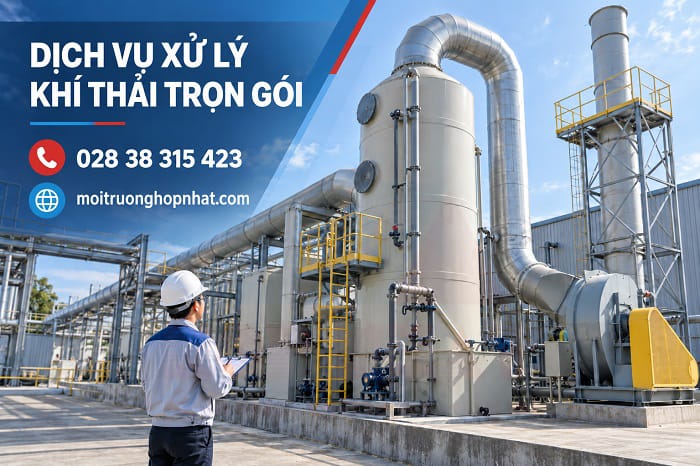
- Designing and installing absorption towers, gas scrubbers, activated carbon towers and more to suit the type of exhaust gas.
- Reinforcing support frames and tower brackets for safety.
- Installing distribution systems for treatment solutions or chemicals.
2.3. Rerouting the entire exhaust ducting system
- Installing new correctly sized ducts to minimize pressure loss.
- Insulating or applying anti-corrosion coating to ducts where needed.
- Redesigning suction and discharge ducting systematically for easy maintenance.
2.4. Installing or upgrading exhaust fans
- Selecting exhaust fans suited to the new flow rate and static pressure.
- Installing corrosion-resistant centrifugal or industrial fans when treating chemical gases.
- Fitting dampers and flexible connectors to reduce vibration and noise during operation.

2.5. Installing control panels and system automation
- Installing a central control panel and setting up automatic operating modes.
- Integrating flow sensors, temperature sensors and more.
- Installing a fault alarm system
2.6. Installing exhaust gas sampling platforms
A working platform is an important component that gives technicians easy access for operating and maintaining the exhaust gas treatment system, especially for tall treatment towers or those located outdoors. Platform installation may include tasks such as:
- Installing the platform by welding or bolting it to the stack body or the building's steel frame.
- Fitting railings and protective guards around it in accordance with safety standards.
- Adding anchor points for attaching safety harnesses when working at height.
- Other work depending on actual site conditions.

3. A company specializing in exhaust gas treatment system renovation and upgrades
United Construction and Environment Technology Joint Stock Company is a contractor specializing in consulting, design and construction of industrial exhaust gas treatment systems. In particular, we also renovate exhaust gas treatment systems, including those not originally designed or installed by us.
Our exhaust gas treatment system renovation service process:
3.1. Receiving your request
If you need to renovate your exhaust gas treatment system, contact us directly via Zalo/Hotline: 0938.857.768 for prompt advice.
3.2. Survey of the system's current condition
- Inspecting the entire existing exhaust gas treatment system.
- Measuring flow rate and inlet and outlet exhaust gas concentrations.
- Assessing the degree of deterioration, leakage and equipment damage.
- Identifying the causes of the system's poor performance.

3.3. Evaluating treatment efficiency against standards
- Comparing monitoring results with the applicable QCVN.
- Analyzing shortfalls: capacity, treatment efficiency and stability.
- Determining which stages need to be replaced, supplemented or improved.
3.4. Consulting and proposing renovation and upgrade solutions
- Proposing an option suited to the facility's specific exhaust gas characteristics.
- Selecting more advanced treatment technology where needed: activated carbon adsorption towers, UV-ozone, biofilters, plasma chambers and more.
- Balancing investment, operating and maintenance costs for the business.
3.5. Detailed design of the renovated system
- Designing layout drawings and new treatment process flow diagrams.
- Calculating the capacity of equipment, ducting, exhaust fans, pumps and more.
- Determining where to install additional equipment or how to modify the old system.
3.6. Equipment supply and replacement
- Replacing damaged equipment: treatment towers, ducts, pumps, fans, filter media and more.
- Installing additional new filtration systems (dry filtration, adsorption, UV, ozone, catalytic and more).
- Updating the electrical and automatic control system where necessary.
3.7. System construction and installation
- Installing new equipment or refurbishing existing equipment.
- Connecting ducting, electrical systems and automatic controls.
- Ensuring minimal disruption to the business's production activities.

3.8. Trial operation of the renovated system
- Test-running the entire system to verify exhaust gas treatment efficiency.
- Adjusting operating parameters (flow rate, contact time, chemicals, etc.) for optimal results.
- Analyzing outlet emissions to compare against standards.
3.9. Handover and operation and maintenance guidance
- Handing the system over to the owner together with detailed operating instructions.
- Setting up a periodic maintenance schedule to maintain long-term treatment performance.
- Advising the business's technicians on how to recognize problems early.
In short, renovating and upgrading an exhaust gas treatment system is not only a way to overcome existing limitations but also a strategic investment that helps businesses adapt to increasingly stringent environmental requirements. A system renovated methodically and consistently across design, technology and operation delivers stable treatment performance, optimized costs and reduced legal risk. It is also an important foundation for businesses to enhance their image and pursue long-term sustainable, environmentally friendly development.
Businesses needing to renovate or upgrade an exhaust gas treatment system are welcome to contact us directly via Zalo/Hotline: 0938.857.768 or send a request for quotation to email:congthongtin@moitruonghopnhat.com for specific advice tailored to your requirements.