
Water Supply Treatment Systems
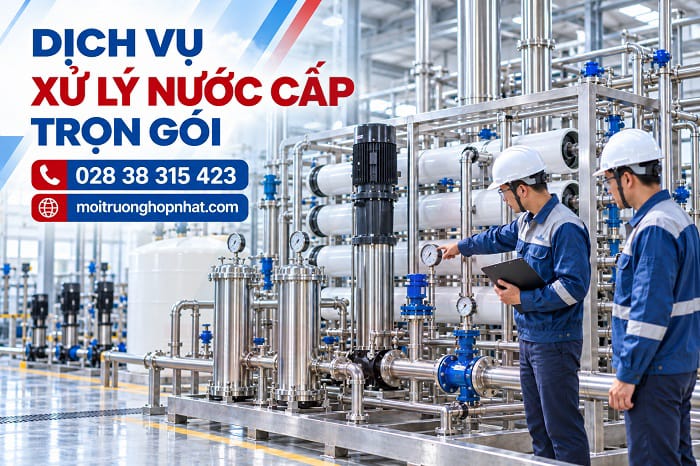
Turnkey Water Supply Treatment Services for Businesses
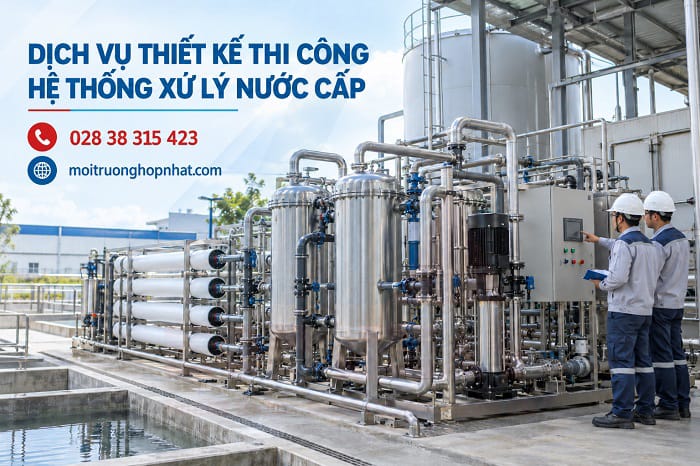
Water Supply Treatment System Design and Construction Services
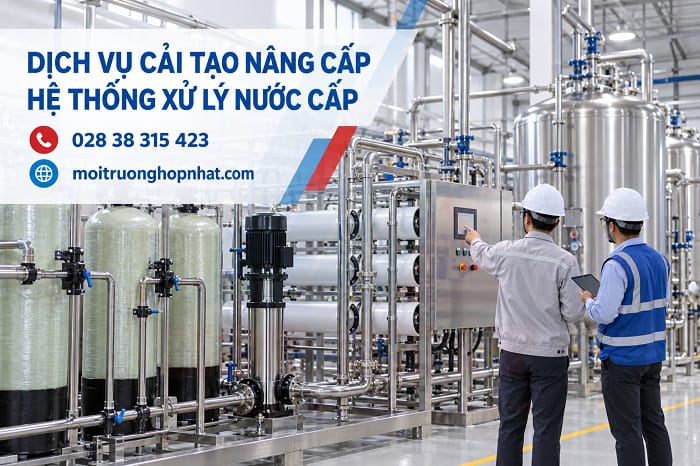
Water Supply Treatment System Renovation and Upgrade Services
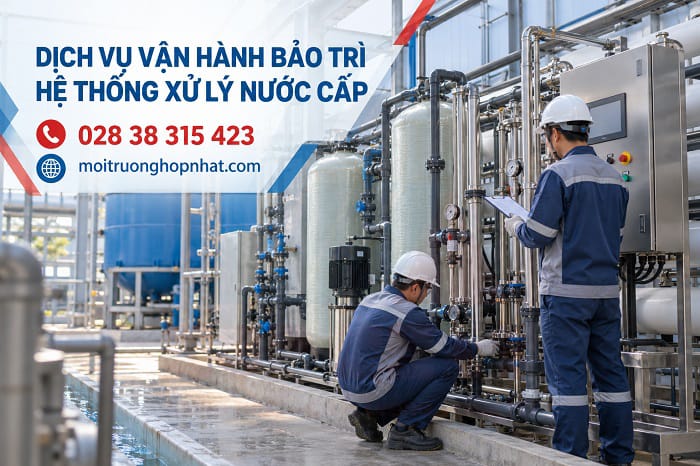
Water Supply Treatment System Operation and Maintenance Services
The water supply treatment technology of United Construction and Environment Technology Joint Stock Company is highly rated by our clients. Our water supply treatment service packages operate on the principle of "quality first".

1. Why use treated supply water?
Supply water is water that has been treated directly by mechanical treatment equipment. It plays an important role in producing high-quality products, raising production quality and supporting a healthy, disease-free life. Using clean water is also an essential daily need for drinking, cooking and household use. Worldwide, 2 out of every 10 people lack water, and only 1 in 3 people has access to clean water; the global clean water problem has reached a red-alert level, especially in African countries.
In Vietnam, urban residents account for 34.4% of the population (according to the 2019 Population and Housing Census). Yet water use in urban areas is a frequent topic of discussion on social media today, with issues such as alum-contaminated (acid sulfate) water, turbid water and water with high lead levels. The main reason is that many industrial clusters and large factories are concentrated in these areas, and lax wastewater treatment releases large volumes of wastewater that pollute external water sources and even groundwater. Therefore, supplying clean water to residential areas is essential.
There are usually two main types of water used as a source for supply water treatment: tap water and groundwater. All of these water sources are controlled through specific parameters to establish standards that meet the demand for clean water, protect health and ensure the highest product quality during production.
There are 2 main types of supply water:
- Supply water for drinking (standard QCVN 01:2009/BYT);
- Supply water for domestic use (standard QCVN 02:2009/BYT).
2. Standard water supply treatment technology
One of the most important factors before treating a poor-quality water source is using the most suitable water supply treatment technology.
- Capable of operating optimally at 100% capacity;
- Simple operation, low cost and minimal maintenance;
- Optimally operated filtration units that prevent sludge and impurities from overflowing into the storage tanks and clean water tanks;
- Attractive and compact, yet able to store 1 – 2 days of water supply.
3. Hop Nhat's standard water supply treatment process
Drawing on practical experience from the projects, methods and water supply treatment approaches it has delivered, Hop Nhat Environment follows a standard 5-step process:
Step 1: Water intake pumping
With a large-volume settling tank system, water is pumped from the river through a bar screen to remove debris, sediment, sand and large obstructions carried by the flow into the storage tank, so that treatment can continue in the following steps.
Step 2: Coagulation
Coagulation and flocculation is the initial step that binds impurities into larger particles that settle to the bottom of the tank.
The most commonly used coagulant is PAC (polyaluminium chloride): a high-molecular-weight compound based mainly on aluminium salts, whose standout advantage is a settling capacity 4 – 5 times that of other compounds. PAC helps produce high-quality water by making sedimentation faster and more effective.
Step 3: Sludge treatment
After the settling period, impurities are fully removed from the upper water layer, while the settled residue (sludge) at the bottom is pumped out. The settled sludge is compressed and used as fertilizer. The settled water continues to be treated with chemicals in the settling tank.
Step 4: Rapid filtration
In the intermediate tank, treatment continues with chemicals to remove impurities, and disinfectants are used to remove microorganisms.
In the filter tank, any remaining impurities are completely removed.
Step 5: Disinfection
An appropriate dose of NaOCl solution is added in the contact tank to fully disinfect any harmful substances and microorganisms remaining in the water before it is supplied for daily domestic use or industrial use.

Above is the water supply treatment process presented by our water supply treatment company. Depending on actual conditions and the characteristics of the raw water source at each site, the treatment process may differ, but the end result is always treated supply water that meets regulatory standards and is safe to use.
If your business needs water supply treatment, please contact Hop Nhat Environment via Hotline: 0938.857.768 or fill in the consultation form below for fast support!


