Industrial Park Wastewater Treatment
In industrial parks, the flow and composition of wastewater from many different manufacturing sectors fluctuate constantly, which can easily overload the system, reduce treatment efficiency and raise operating costs. The technology used for industrial park wastewater treatment therefore needs to match the characteristics of the waste streams, the design capacity and the effluent requirements. This article helps businesses understand the characteristics of the wastewater, the treatment process and the key points to consider when investing in and operating a treatment system.
Article contents:
1. Overview of industrial park wastewater
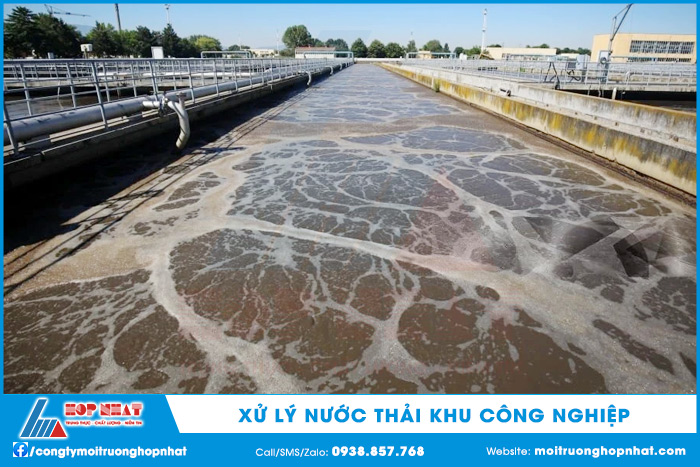
Industrial park wastewater is the wastewater generated by the production activities of tenant companies, the domestic activities of their workers and various support activities within the park. At each factory, wastewater may be pre-treated as required before being connected to the park's common collection network and conveyed to the centralized wastewater treatment plant.
An industrial park wastewater treatment system typically includes the collection network, receiving structures, treatment stages, a water quality control system, and facilities for sludge management, incident response and operation.
When planning the investment in a treatment system, the project owner should consider the following key aspects:
- Current wastewater flow and the flow expected in the future.
- Wastewater characteristics of the manufacturing sectors in the industrial park.
- Connection conditions and discharge standards for tenant companies.
- Capacity and pollutant load-handling capability of the centralized treatment system.
- Effluent quality requirements under the applicable legal documents.
- The ability to control, operate, maintain and handle incidents during operation.
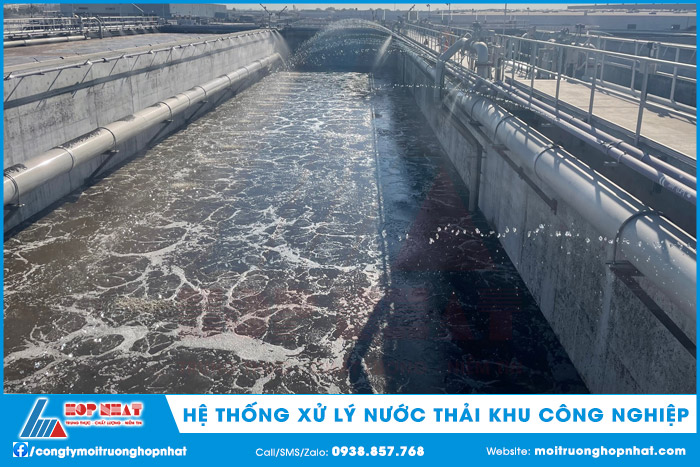
Considering these factors together makes the wastewater treatment system better suited to actual conditions, and helps avoid a facility that is quickly overloaded or no longer meets requirements once the mix of companies in the industrial park changes.
2. Characteristics of industrial park wastewater
Industrial park wastewater is notably diverse and highly variable, because the combined stream comes from many different production facilities. Differences in industry, raw materials, production technology, scale of operation and discharge timing mean that both the flow and the properties of the wastewater can change significantly within a single day or between operating periods.
Some characteristics to note include:
- Diverse sources: Wastewater may come from food processing, textile dyeing, mechanical engineering, electronics, chemicals and many other types of production.
- Variable flow: The volume of wastewater depends on production output, the number of shifts, cleaning activities and the discharge timing of each company.
- Non-uniform properties: pH, temperature, color, organic content and other parameters can vary from one source to another.
- Risk of shock loads: When one or more companies discharge high-strength wastewater over a short period, the centralized system can be affected if it lacks adequate equalization capacity.
- Hard-to-treat streams may occur: Some industries generate chemicals, metals or persistent organic compounds, which raise the demands on the treatment technology.
- Source control is needed: Checking connection conditions and monitoring the wastewater from each company helps keep abnormal discharges out of the common system.
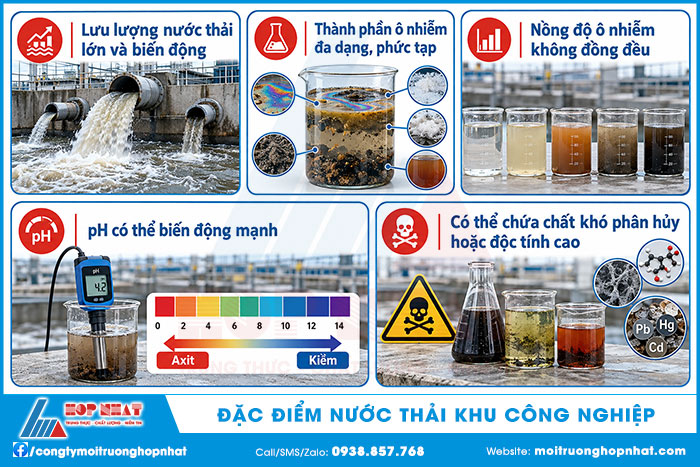
Because of this variability, the design or renovation of a system needs to be based on site surveys and sufficiently representative data. Relying on a single water sample taken at one point in time to determine the entire technology may result in a treatment solution that is unsuitable for long-term operating conditions.
3. Pollutants in industrial park wastewater
The pollutants in industrial park wastewater depend directly on the industries, raw materials, chemicals and production processes of the companies operating there. Not every industrial park therefore has the same pollutant profile, and one should not assume that a given wastewater stream contains every commonly encountered group of substances.
Commonly monitored parameter groups include:
- Organic matter: Usually assessed through BOD₅ and COD. A high organic content increases the load on biological treatment stages or oxidation processes.
- Total suspended solids (TSS): May come from raw materials, production residues or cleaning. High TSS increases the load on settling, filtration and sludge treatment stages.
- Nitrogen and phosphorus compounds: May come from domestic wastewater, raw materials or certain production processes, and need to be considered when selecting the technology.
- Oil and grease: Common in mechanical engineering, food processing and equipment maintenance. If not controlled, oil and grease can affect the downstream treatment stages.
- Heavy metals: May be present in metalworking, surface treatment, electronics or other activities that use metal compounds.
- Chemicals and specific pollutants: Depending on the industry, wastewater may contain color, surfactants, solvents or persistent compounds.
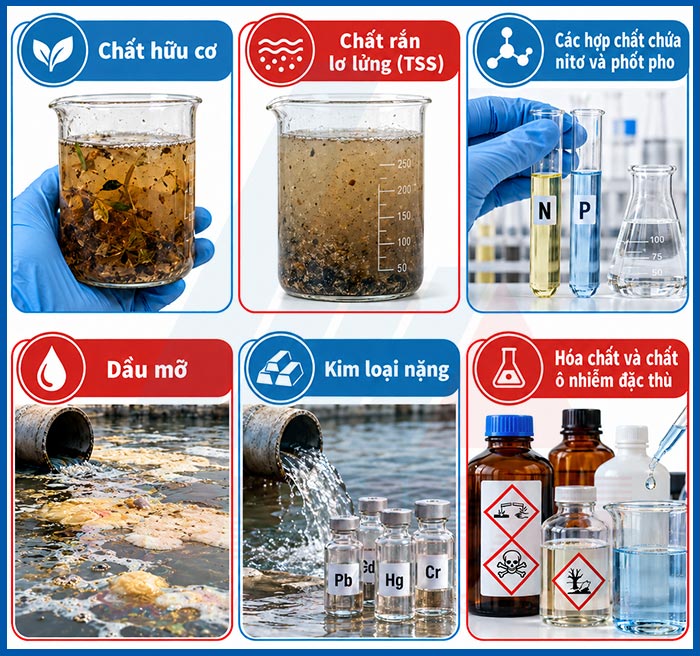
Sampling and analyzing the wastewater is an important basis for determining the pollutant load and selecting a suitable technology. Analytical results should be evaluated together with the flow and the degree of variability of the waste streams to reflect the actual conditions of the industrial park.
4. Industrial park wastewater treatment process
The treatment process for industrial park wastewater should be selected based on the wastewater characteristics, flow, pollutant load and effluent quality requirements. For wastewater containing persistent organic compounds or requiring enhanced oxidation, the system may consider a combined scheme of Fenton oxidation, coagulation–flocculation, settling, pressure filtration and disinfection.
Reference process flow: Centralized WWTP with a capacity of 3,000 m³/day for an industrial park (new construction):
Wastewater > Monitoring channel 1 > Equalization tank > pH reduction tank > Fenton tank > Oxidation tank > Neutralization tank > Flocculation tank > Physico-chemical settling tank > Intermediate tank > Pressure filter > Disinfection tank > Monitoring channel 2 > Discharge
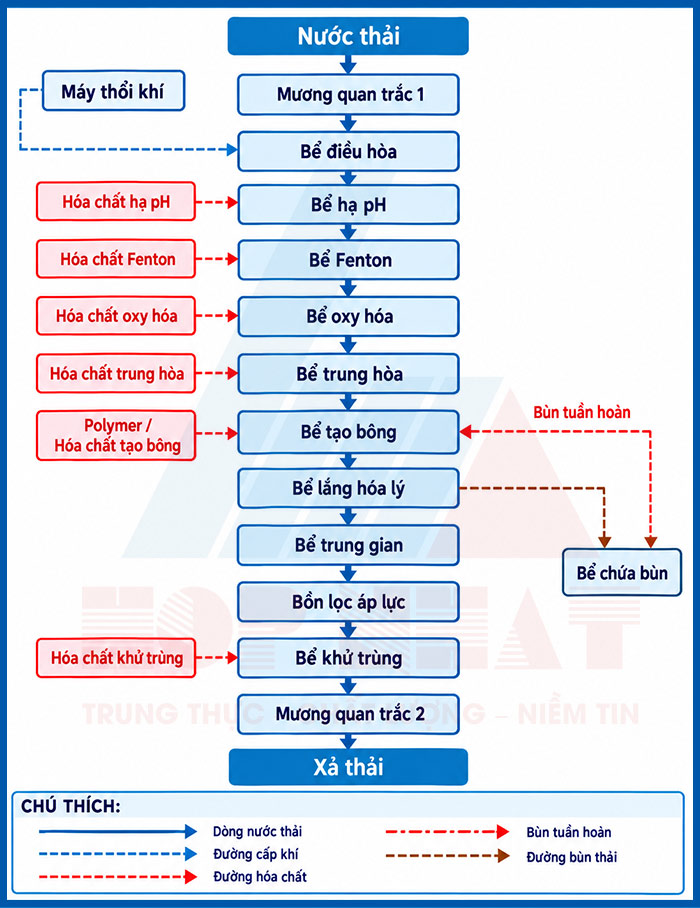
If the treated water does not yet meet requirements, it can be recirculated to the equalization tank for re-treatment. Sludge from the physico-chemical settling tank is collected in the sludge holding tank for further management and treatment.
Process description:
- Monitoring channel 1: Receives wastewater from the tenant companies and checks the influent quality. This stage helps detect abnormal discharges early, before they enter the treatment system.
- Equalization tank: Balances the flow and quality of the wastewater, limiting fluctuations in pH, COD, TSS and other parameters. The tank keeps the flow relatively stable before it moves on to physico-chemical treatment.
- pH reduction tank: H₂SO₄ is dosed to bring the water to a suitable range for the Fenton reaction. In the reference process, pH can be controlled at around 2–4.
- Fenton tank: FeSO₄ and H₂O₂ are dosed to generate strong oxidizing agents. This process helps break down complex organic compounds into compounds with simpler structures.
- Oxidation tank: An aeration system is used to help deal with residual oxidizing chemicals and improve mixing. The wastewater then moves on to the neutralization stage.
- Neutralization tank: NaOH is used to raise the pH to a suitable range, while PAC is added to support coagulation. In the reference scheme, pH at this stage can be adjusted to about 7.0–8.0.
- Flocculation tank: Polymer is dosed to bind fine particles into larger flocs. The mixing speed is kept at a suitable level to avoid breaking up the flocs that have formed.
- Physico-chemical settling tank: The flocs are separated from the water by gravity. Settled sludge is collected in the sludge holding tank, while the supernatant flows on to the intermediate tank.
- Intermediate tank: Settled water is held temporarily before being pumped through the pressure filter. This tank also supports recirculation when the system needs to re-treat water.
- Pressure filter: Water passes through filter media such as sand and gravel to remove the remaining suspended solids. The filter media must be backwashed periodically to maintain performance.
- Disinfection tank: A disinfectant is dosed to control microorganisms in the water before discharge. The type of chemical and the dosage should be determined according to the water quality and actual operating conditions.
- Monitoring channel 2: Checks the water quality after the entire treatment process. If the water meets requirements, it is discharged according to the approved plan; if not, it can be recirculated to the equalization tank for further treatment.
- Sludge holding tank: Physico-chemical sludge is collected in the holding tank for storage and subsequent management. Water separated from the sludge can be returned to the treatment system.
5. Key factors in the operating performance of an industrial park WWTP
The performance of an industrial park wastewater treatment system depends not only on the selected technology but also on source management, equipment, staffing and the operating regime. Even a properly designed system can operate unstably if influent control is lacking or maintenance is not carried out as planned.
The key factors to control include:
- Influent quality: The concentration and composition of wastewater from tenant companies must stay within what the system can accept. Abnormal discharges can change the entire operating conditions.
- Flow and pollutant load: The system's capacity must match the actual flow while still being able to cope when production output or the number of tenant companies increases.
- Equalization capacity: The equalization tank must be able to balance the flow and limit fluctuations in water quality before the water enters the main treatment stages.
- Chemical control: Doses of acid, alkali, oxidant, coagulant and polymer must be adjusted to actual conditions. Dosing too little or too much chemical can both affect treatment efficiency and operating costs.
- Equipment condition: Pumps, air blowers, chemical dosing pumps, mixers and measuring instruments should be inspected regularly. Unstable equipment can interrupt the entire treatment line.
- Sludge management: The sludge generated must be collected and treated in a timely manner. Letting sludge accumulate for too long can impair settling efficiency and the quality of the treated water.
- Monitoring and maintenance: Tracking water quality and maintaining equipment according to plan helps detect incident risks early and keeps the system operating stably.
6. Industrial park wastewater treatment services at Hop Nhat Environment
With more than 10 years of experience in the environmental field, Hop Nhat Environment has built up hands-on experience in consulting, designing, constructing, renovating and operating wastewater treatment systems for many types of production. For industrial park projects, the company selects the treatment solution based on the characteristics of the waste streams, capacity, existing system and operating requirements rather than applying a fixed technology.
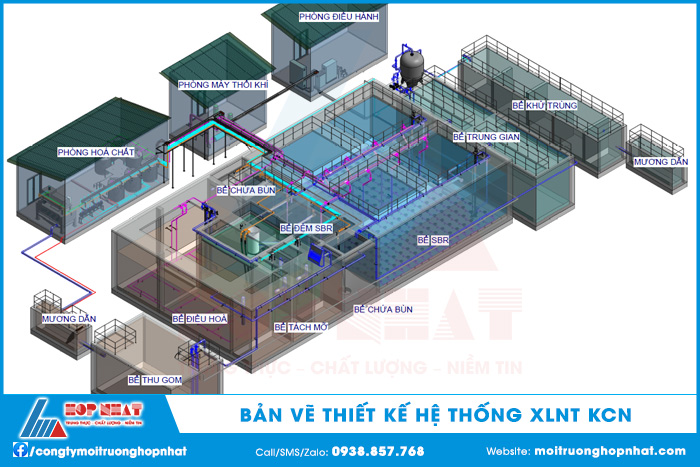
Hop Nhat Environment can support project owners and businesses with the following:
- Site survey and assessment: Inspecting the sources, flow and characteristics of the wastewater, the collection network, the treatment structures and the condition of the equipment in operation.
- Technology consulting: Analyzing input data to select or adjust a treatment solution that suits the waste stream characteristics and the effluent requirements.
- Treatment system design: Carrying out process, civil and equipment design based on the project's capacity and site conditions.
- Construction and installation: Carrying out civil works, piping, mechanical and electrical equipment and technical systems within the agreed scope of work.
- System renovation and upgrade: Assessing the causes when an existing system is frequently overloaded, its equipment has deteriorated or its treatment performance no longer meets needs, and proposing a suitable renovation plan.
- Operation and maintenance: Supporting parameter monitoring, chemical control, equipment management, sludge handling and keeping the system running.
- Environmental compliance consulting: Supporting businesses with the relevant environmental documentation and procedures within the scope of the project.

In addition to practical project experience, Hop Nhat Environment focuses on building a technical team with expertise in environmental technology, mechanical and electrical engineering, and system operation. Coordination between these teams allows projects to be assessed not only from a treatment-technology perspective but also in terms of constructability, ease of operation and the maintenance plan once the facility is put into service.
In short, industrial park wastewater treatment requires a combination of suitable technology, source control and a stable operating process. Project owners should assess the flow, pollutant composition, capacity and current condition of the system to choose the right treatment solution. Investing correctly from the start, or renovating in good time, improves treatment efficiency, meets environmental requirements, limits overloading and optimizes long-term operating costs.
If you need consulting, design, construction or renovation of an industrial park wastewater treatment system, please contact Hop Nhat Environment via Hotline: 0938.857.768 or Leave Your Details in the Consultation Form for a site survey, assessment of current conditions and a solution suited to your waste stream characteristics, capacity and actual operating conditions.
You may also be interested in: